A crash test dummy, a car with no brakes and 480 metres of drums, crates, fans and a billboard. The further he goes, the more it pays, from 0.10x to 500x.
One button. The outcome is decided before the car moves, then the physics stages a flight that lands in exactly that payout. Nobody can steer it, everybody wants to watch it.
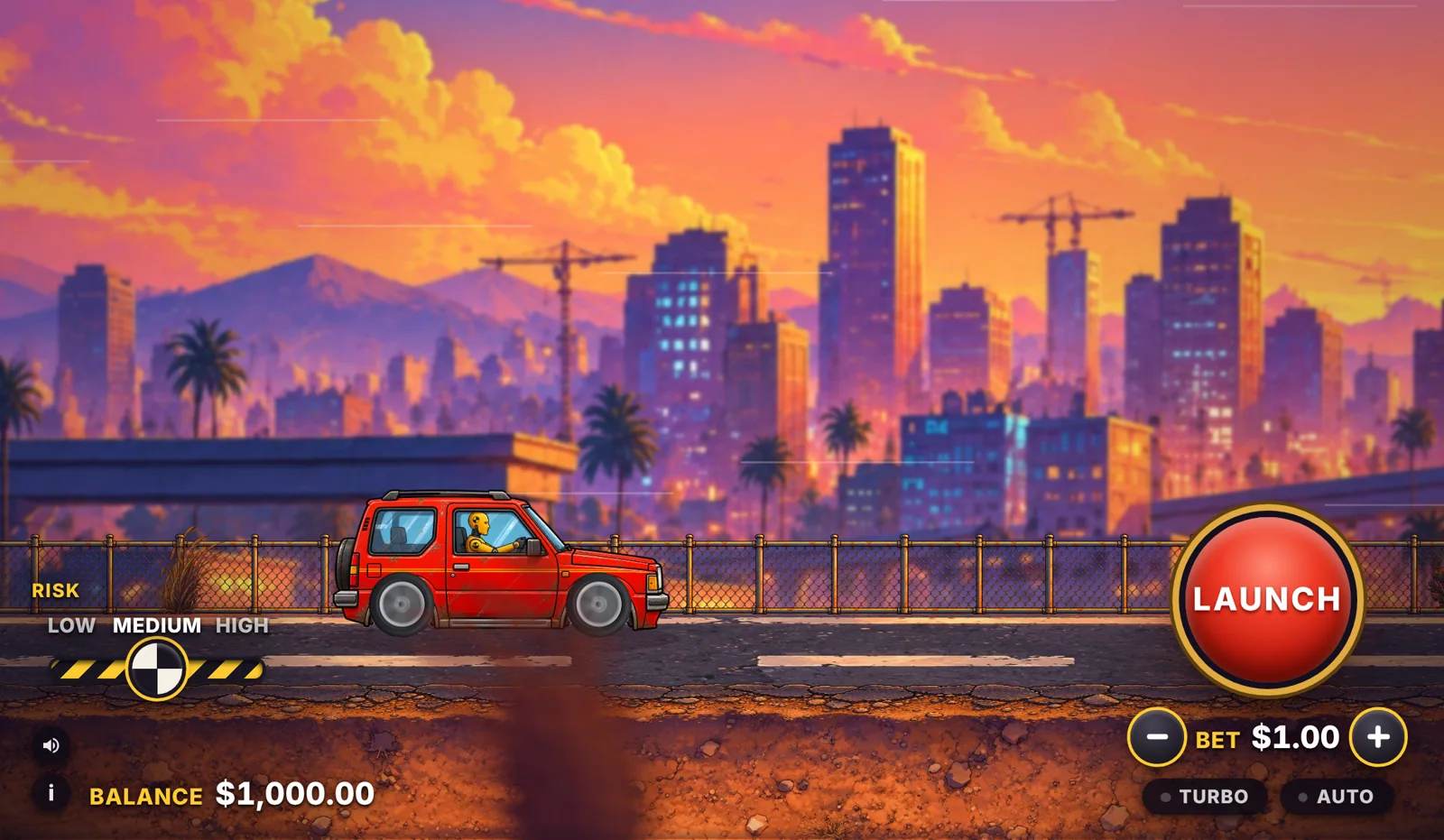
The car drives in, engine running. Pick a bet and a risk level, then hit LAUNCH.
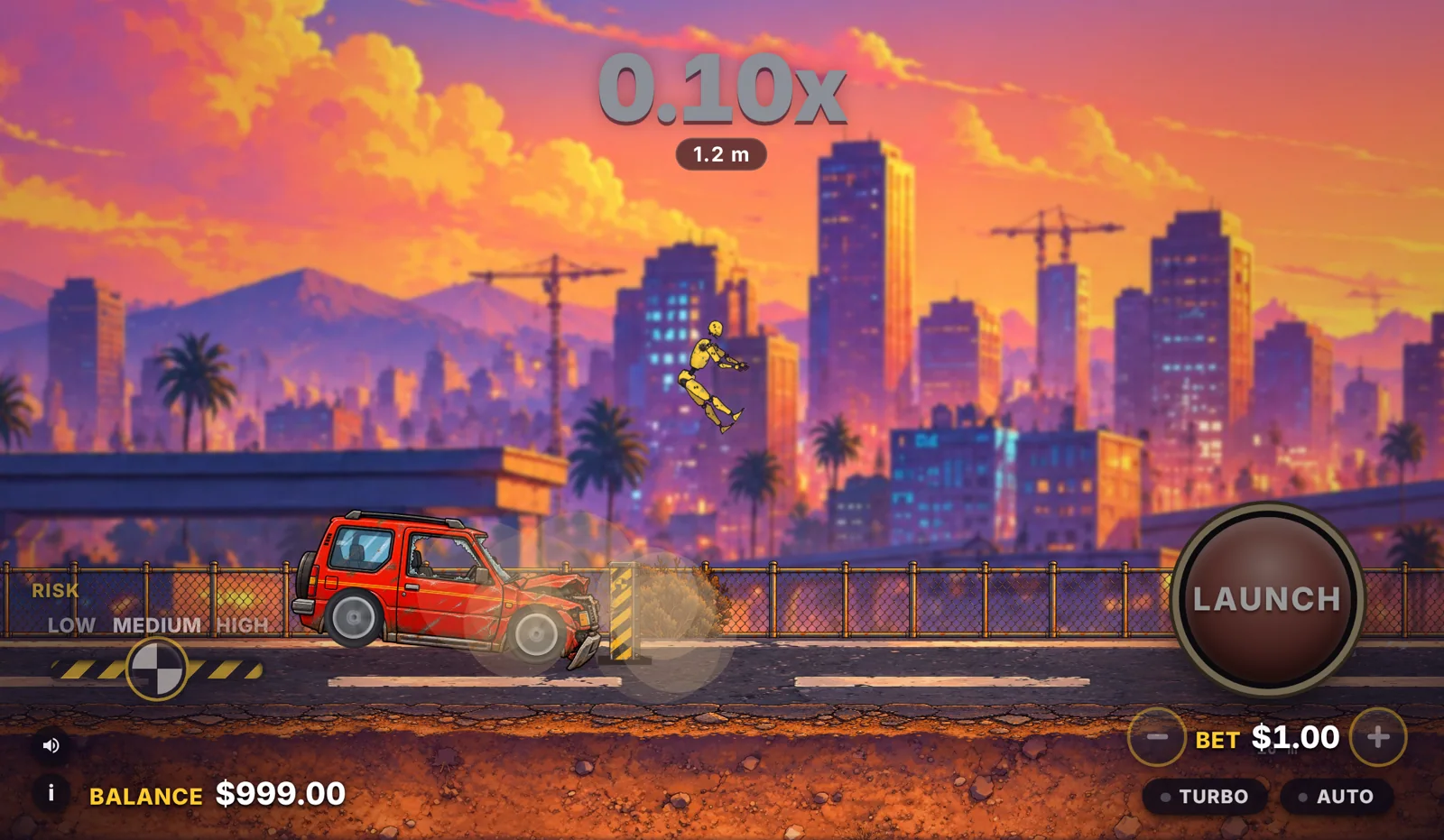
A barrier punches up, the car folds, the windscreen goes and the dummy leaves. Whistle starts.
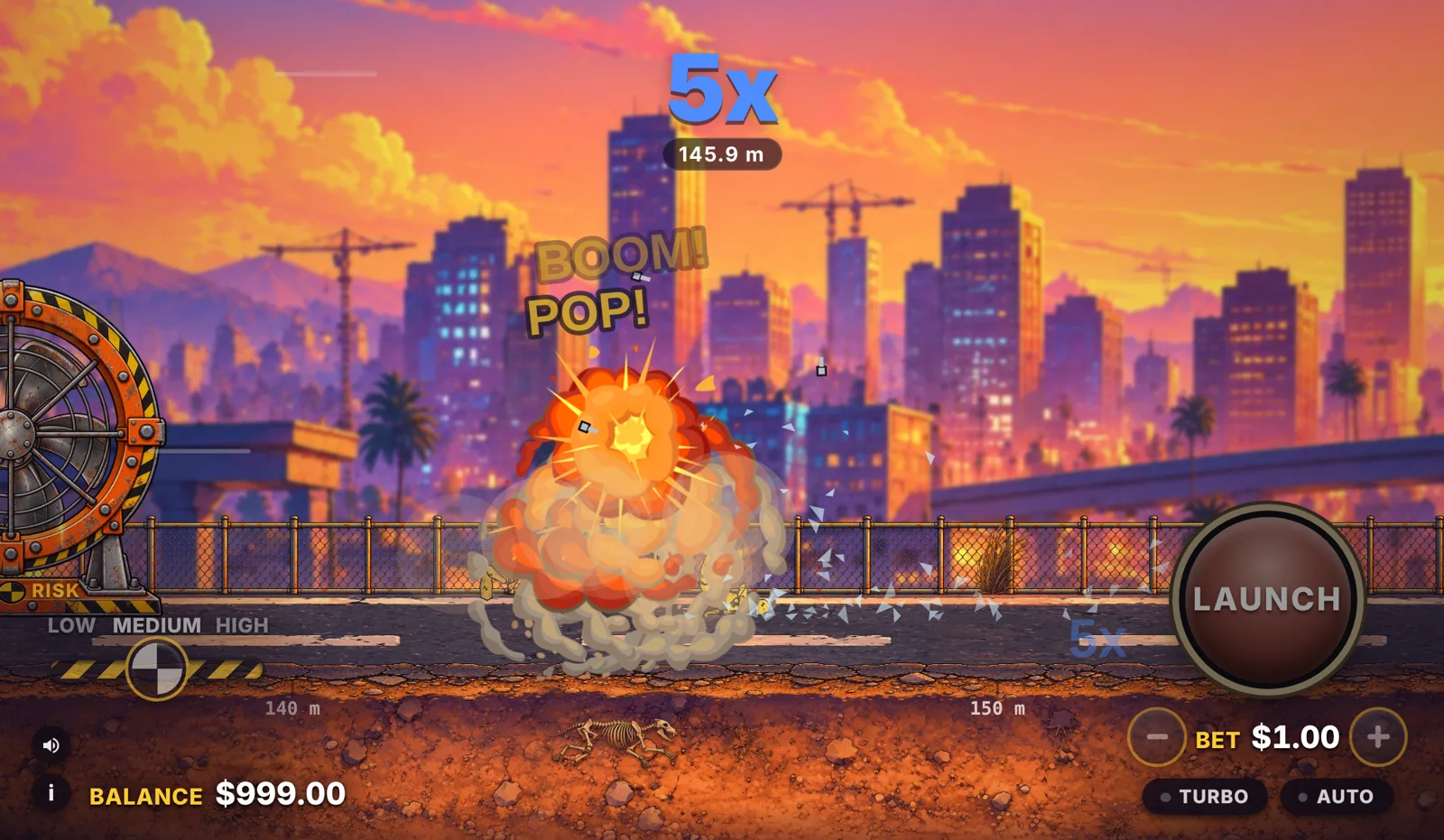
Drums blow, fans throw him forwards, crates burst, the billboard tears. Signs light up as he passes each payout.
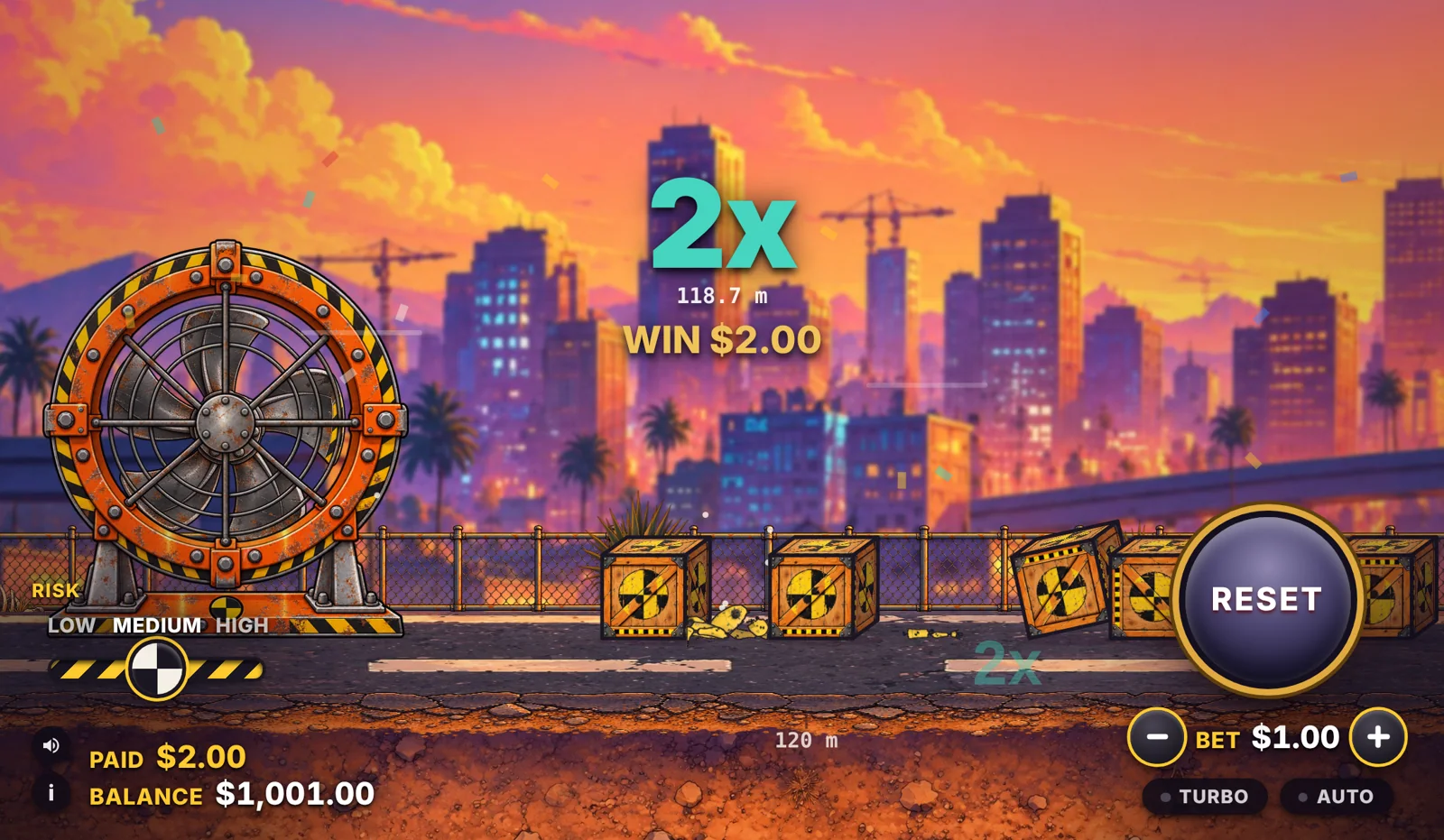
Where he stops is what you win. RESET, go again, or flick on AUTO and TURBO.
Every payout zone has something in it to hit. Small payouts are short hops into crates and drums. Big ones are a chain: land on a drum pile, get blown forwards, catch a fan, clear the billboard, hit the wall.
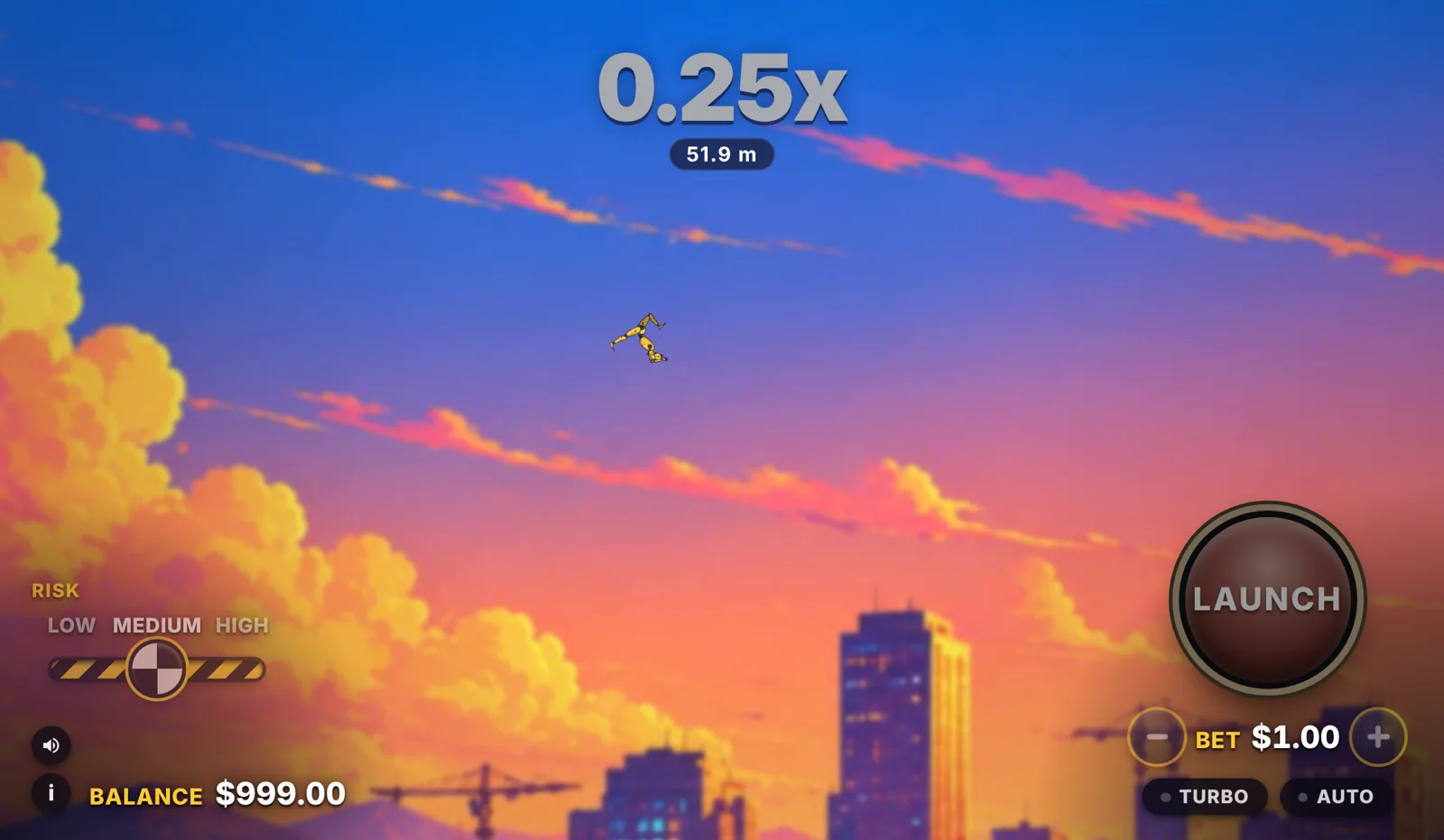
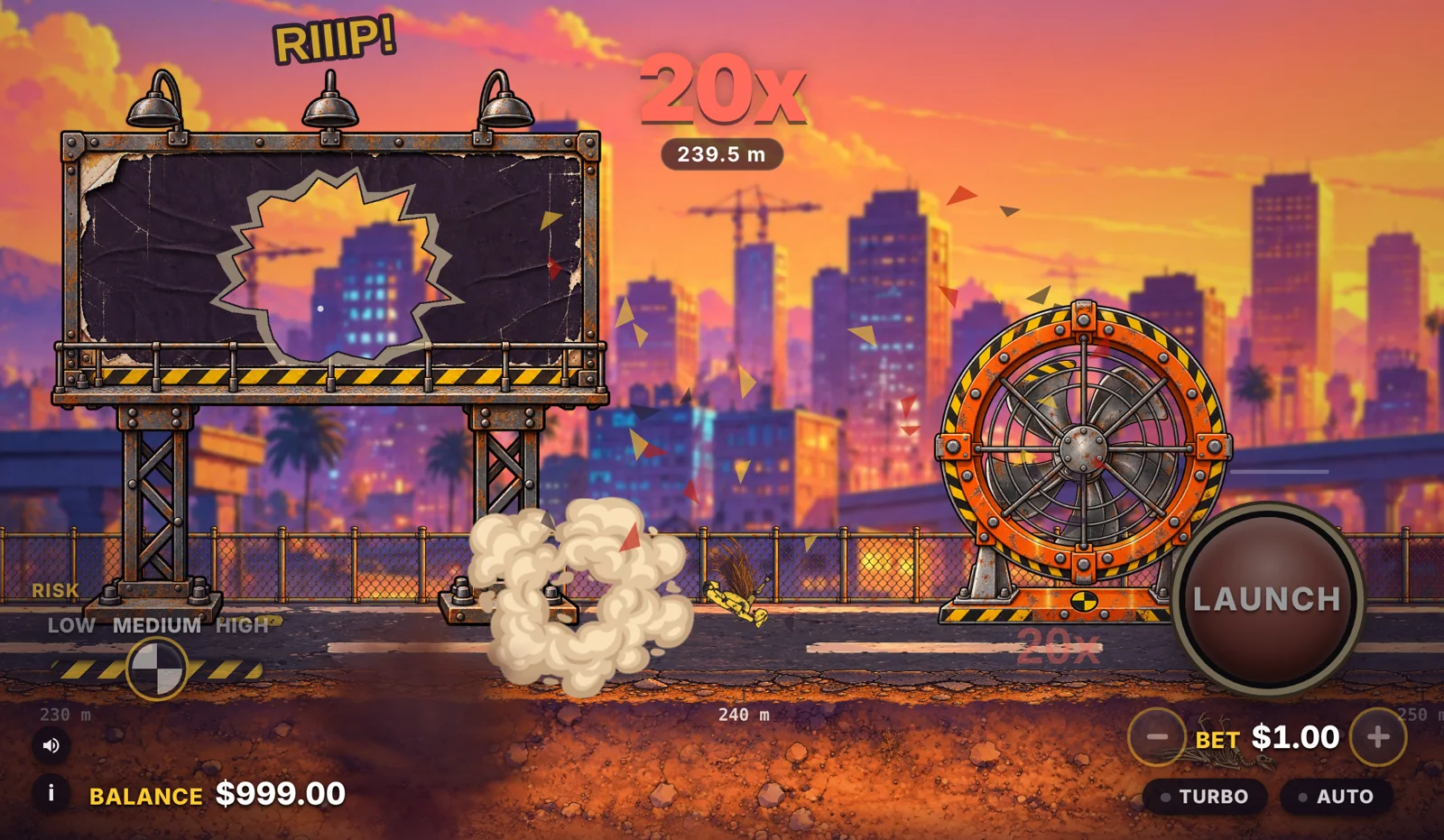
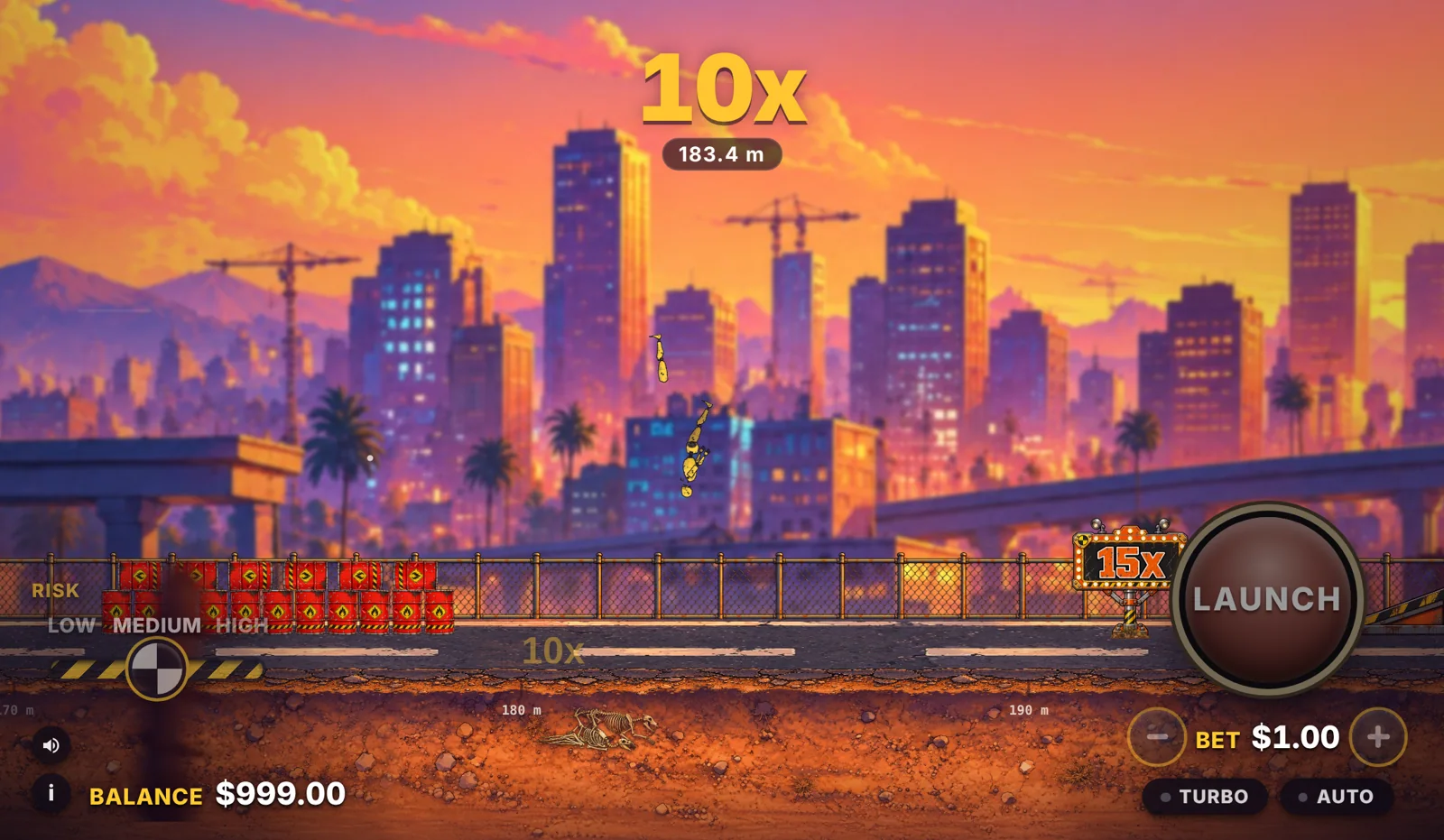
Portrait gets its own layout, not a shrunk desktop. The scene takes the top two thirds, the controls get a panel of their own under your thumb.
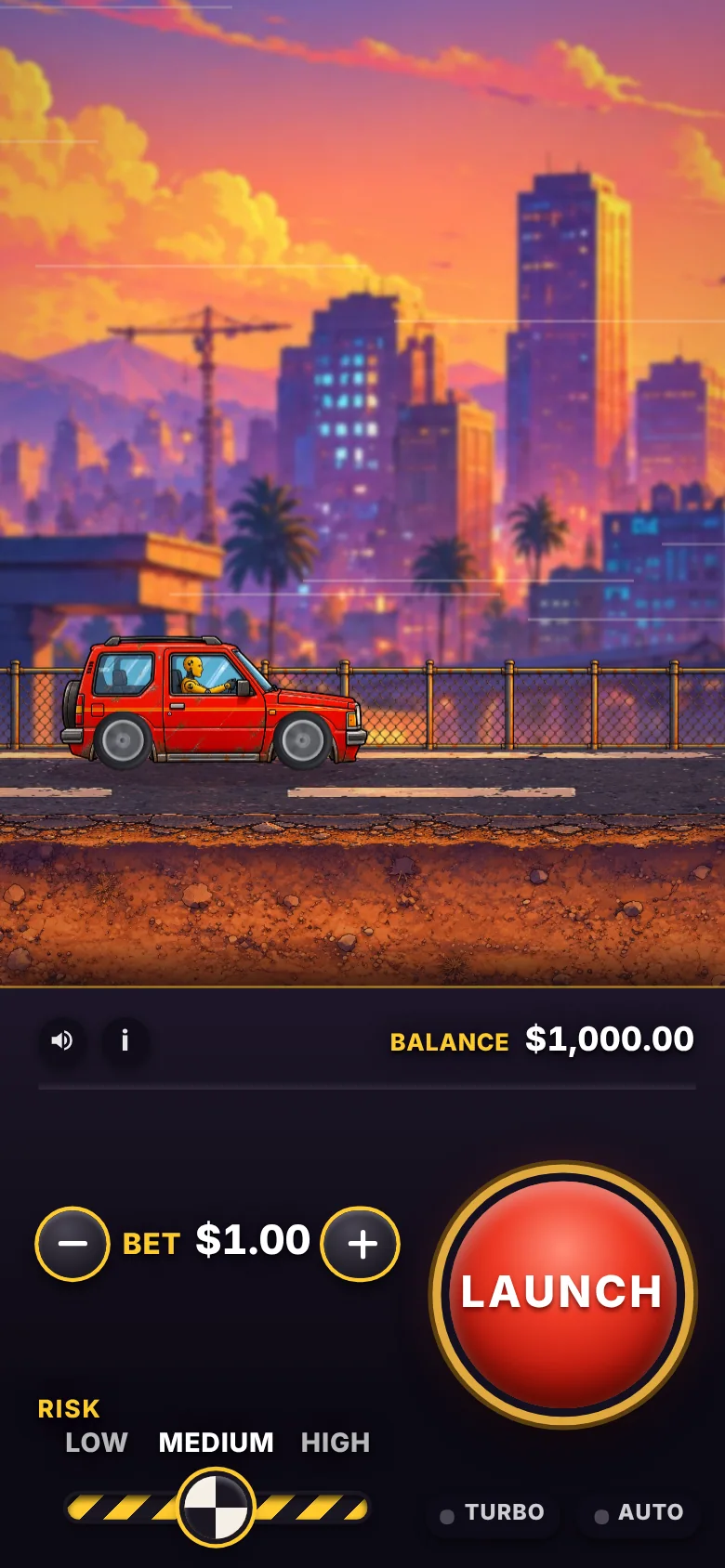
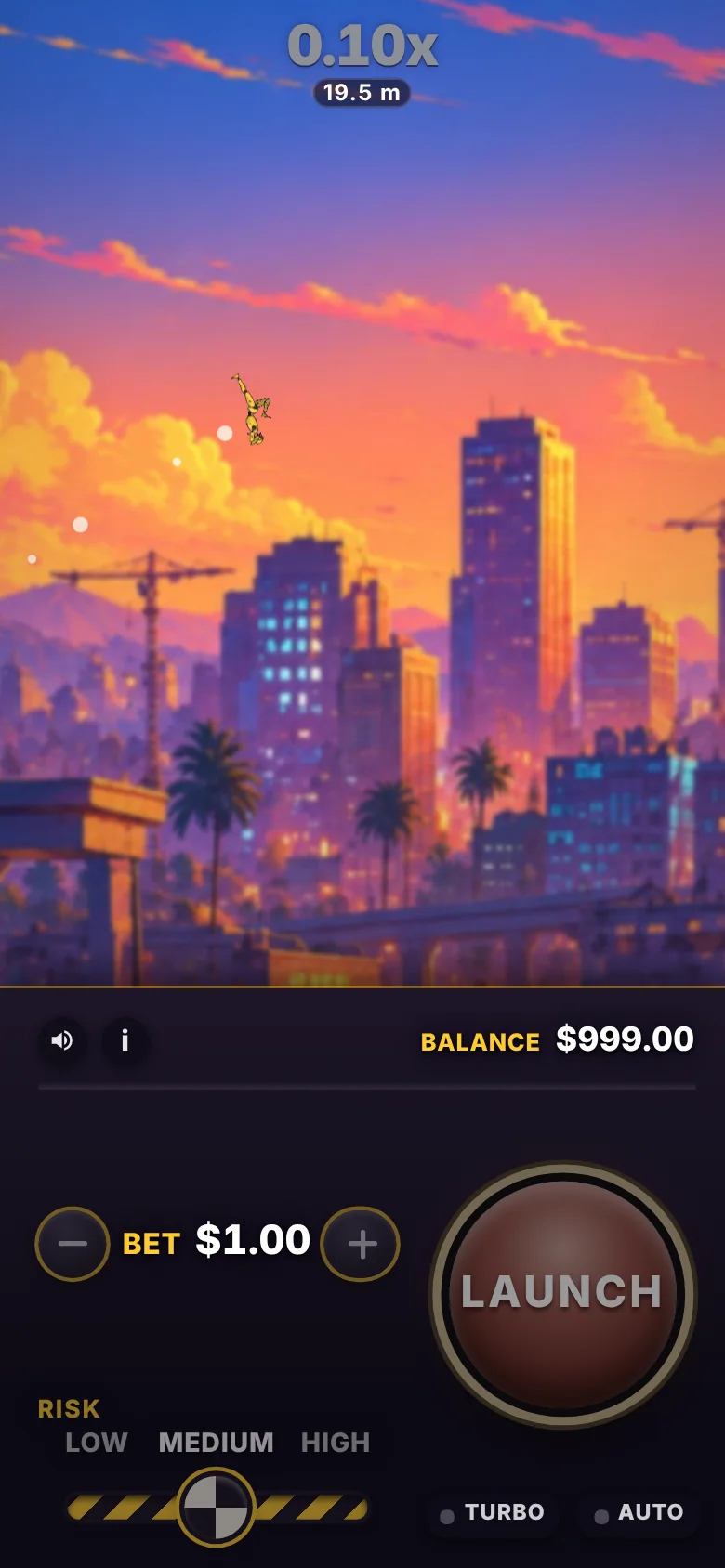
All 2D, hand painted, side on. Each prop sits on the same road line and casts into the same sunset.
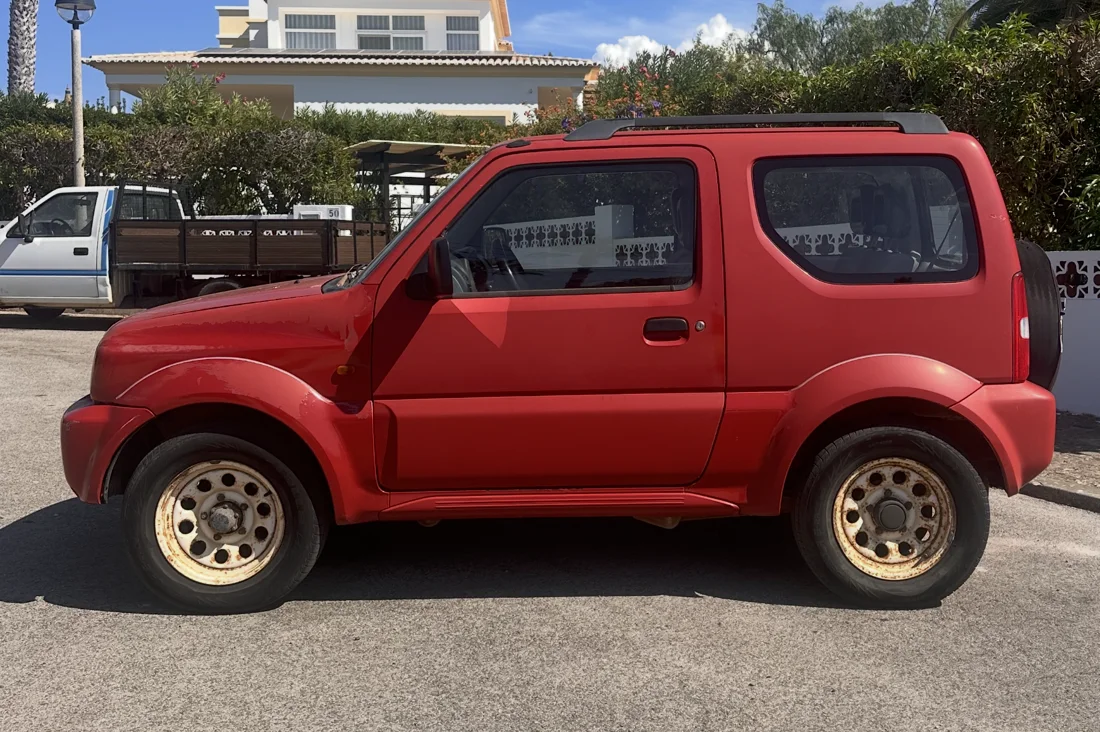
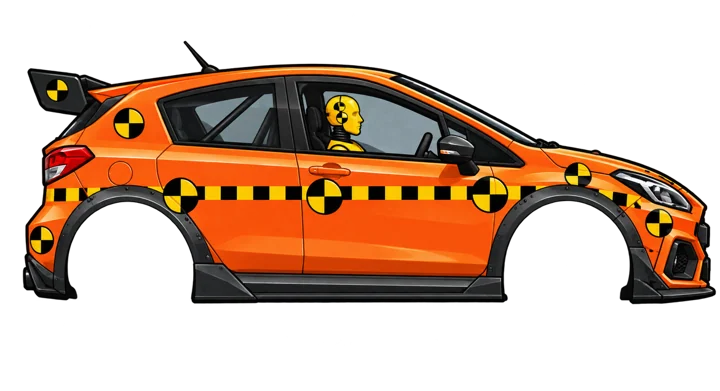
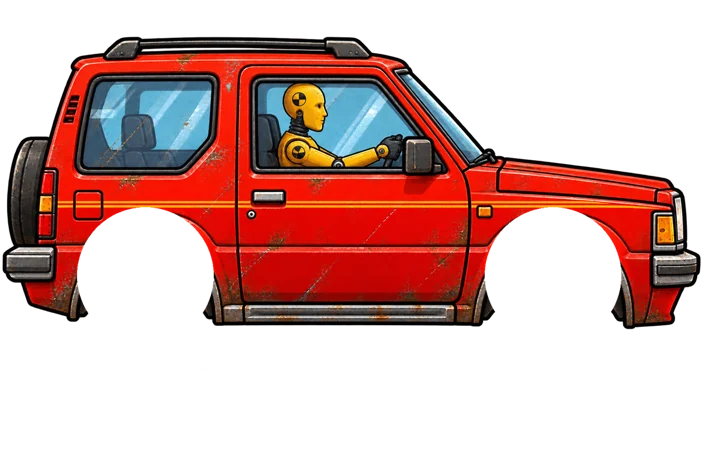
The first car was an orange hatchback. Perfectly fine, perfectly forgettable. Then on a dog walk Stef passed a sun faded red 4x4 with rusty wheels, took a photo, and the hatchback was retired on the spot. The photo became the brief: same boxy shape, same tired paint, a crash test dummy at the wheel.
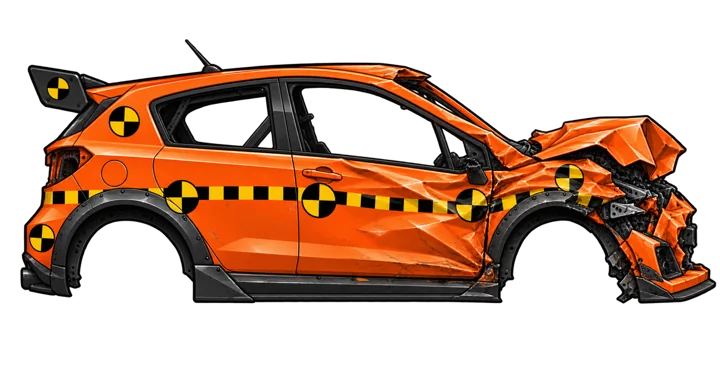
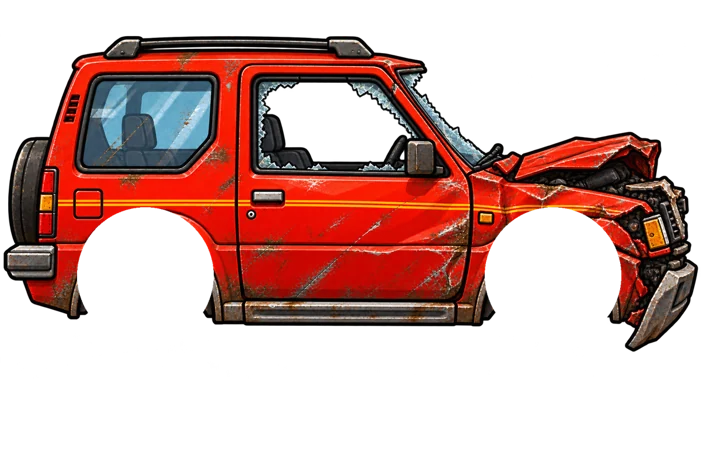
Same physics under all five, so the maths never changes. Only the art does. Each one has a clean version for the drive in and a wrecked one swapped in on impact. They’re all drawn without wheels so the wheels can spin on their own.
carThe red 4x4. Drives in with the dummy at the wheel.
car_crashedBonnet folded, screen gone, seat empty.
car_v1The orange hatchback, back in the rotation.
car_v1_crashedFront caved in.
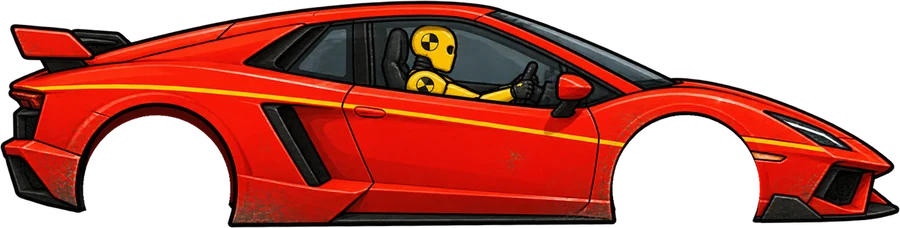
car_sportsThe sports car. Low, fast and very red.
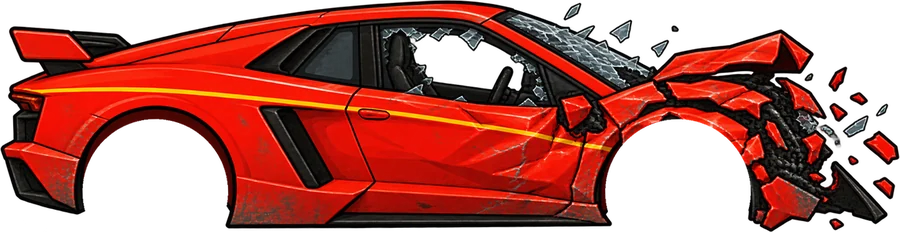
car_sports_crashedNose shattered into the barrier.
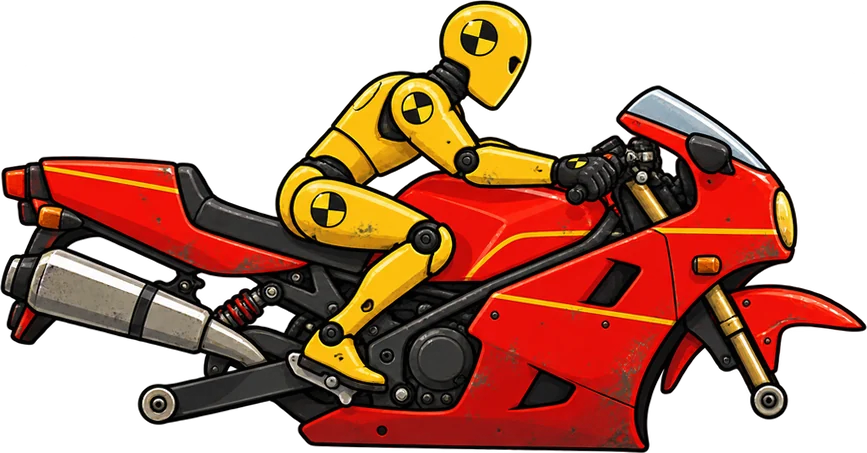
car_bikeThe motorbike. No doors, so he’s already halfway out.
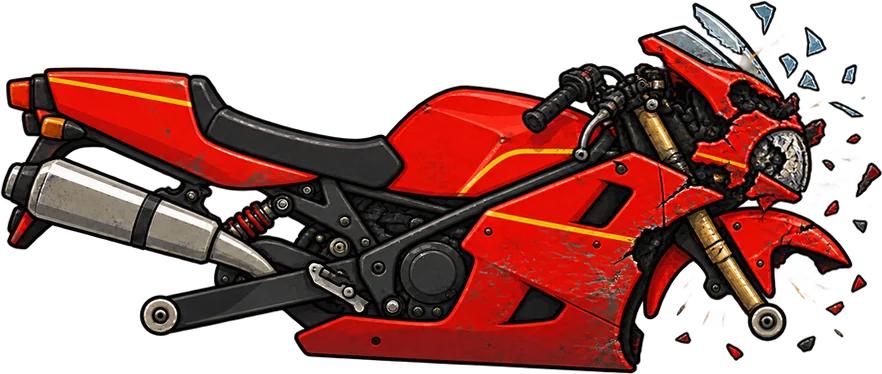
car_bike_crashedFront forks and fairing gone.
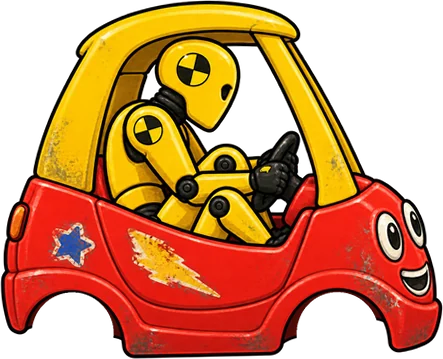
car_toyThe toy car. Drawn 30% bigger so it reads on the road.
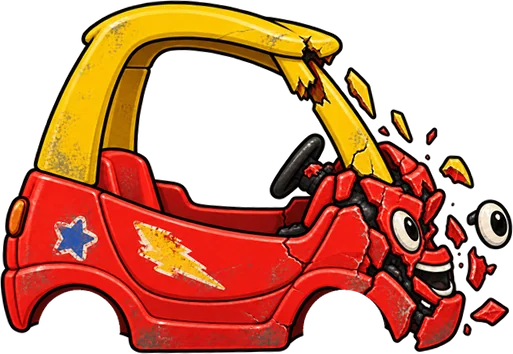
car_toy_crashedEven the face takes a hit.
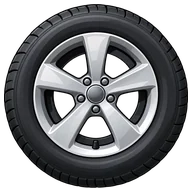
wheelAt rest and slow. Shared by every vehicle.
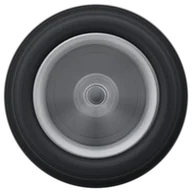
wheel_blurSpin blur while driving.

head
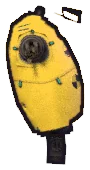
torso

pelvis
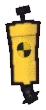
upper arm
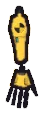
forearm
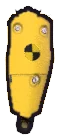
thigh
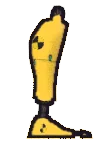
shin
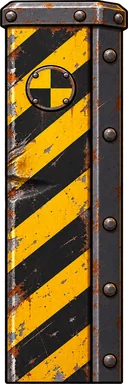
barrierPunches up out of the road.
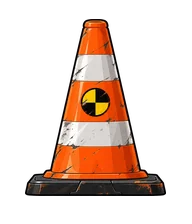
coneSkittles for 0.10x.
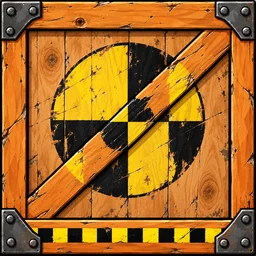
crateStacks, bursts in a dust puff.
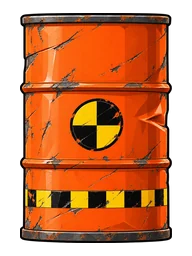
drumRows and pyramids. Explodes.
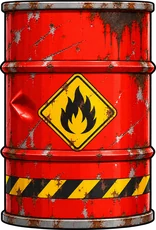
explosive drumThe piles that launch him.
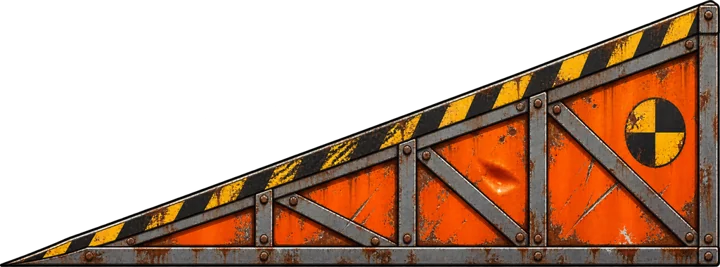
rampTwo of them. The second one is for 500x.
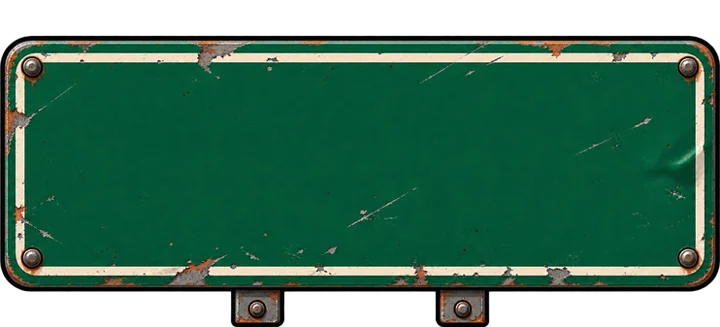
road signSwings on a sprung pole.

pole
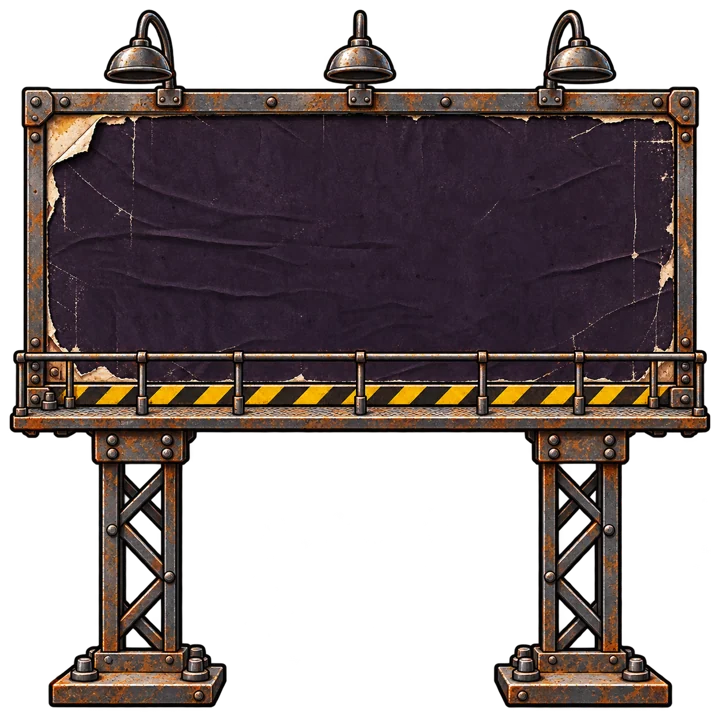
billboardPaper panel, breakable.
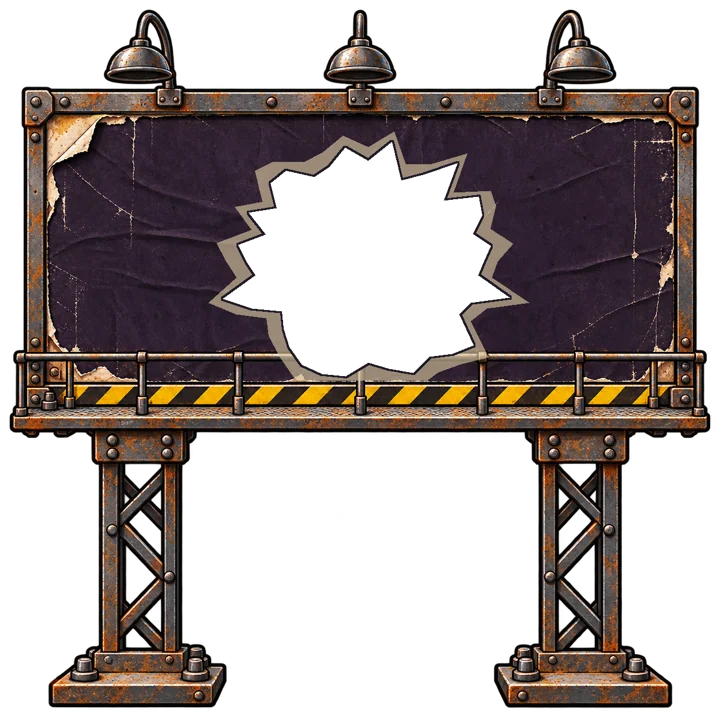
billboard, smashedDummy shaped hole.
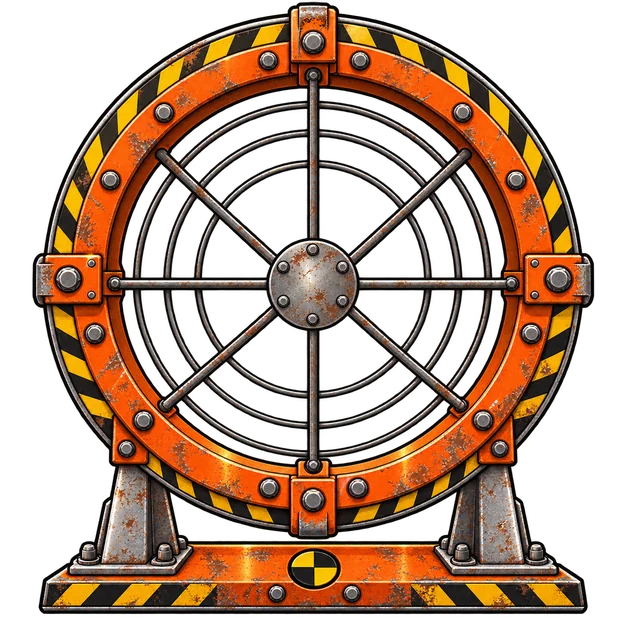
fan frame
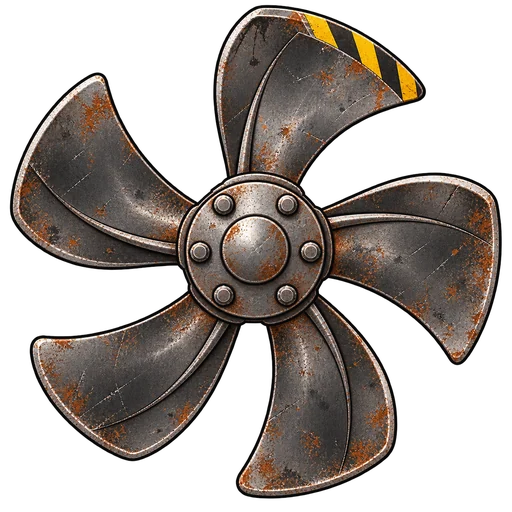
fan bladesSpin on their own layer.
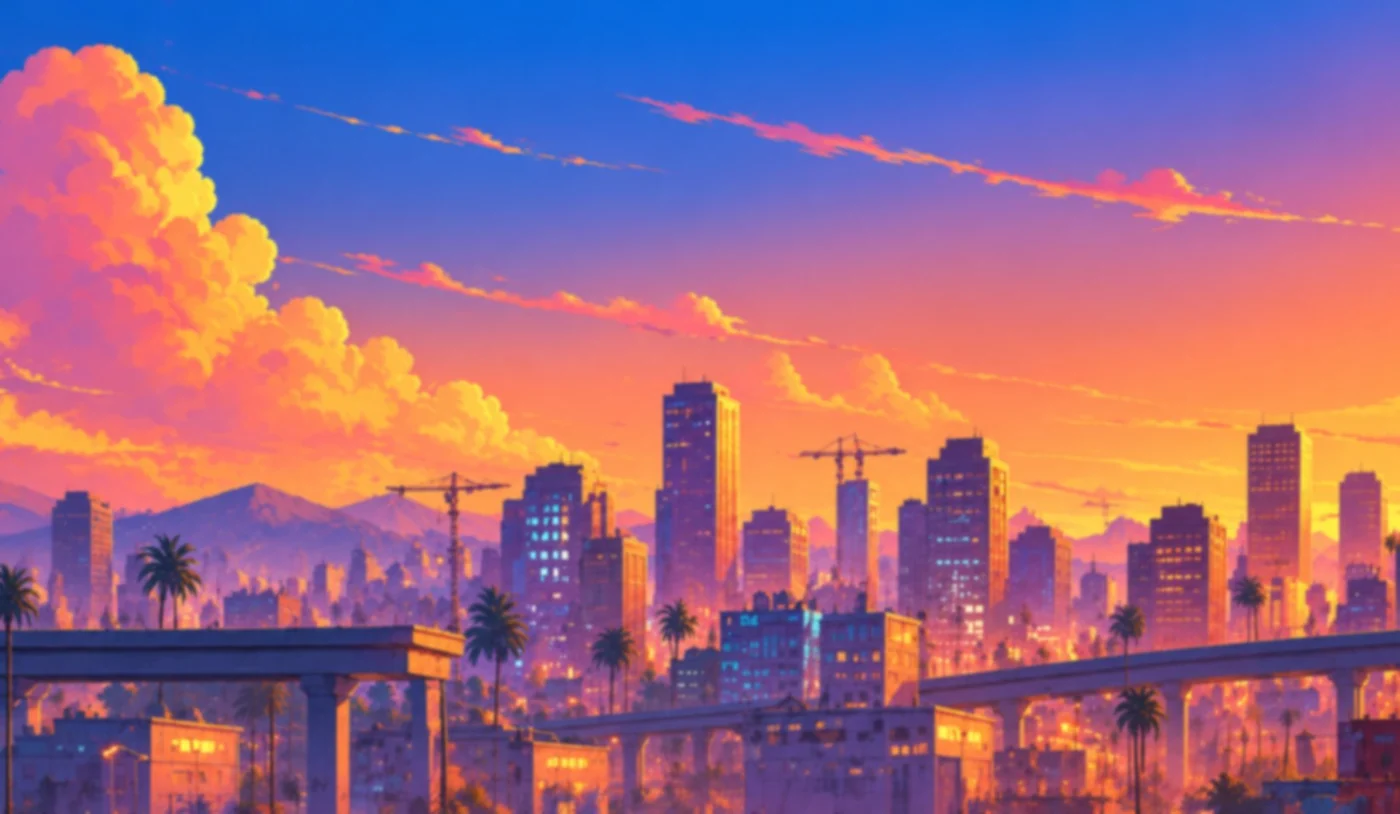
backgroundCity at sunset, softly blurred.
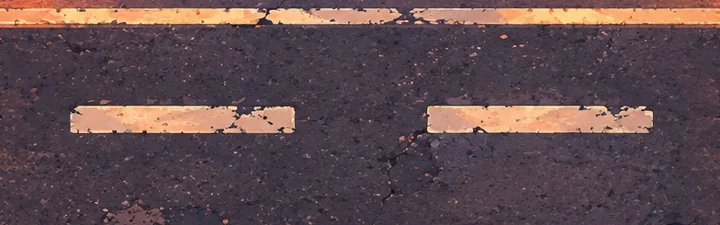
roadSeamless 14 m tile.
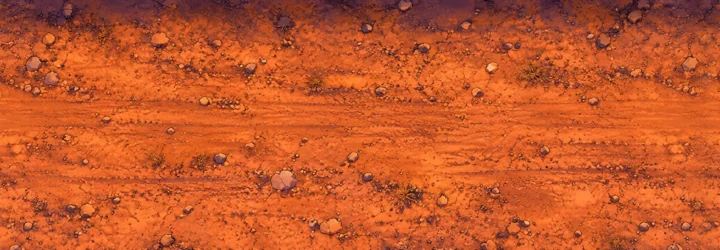
dirtSeamless 18 m tile under the road.
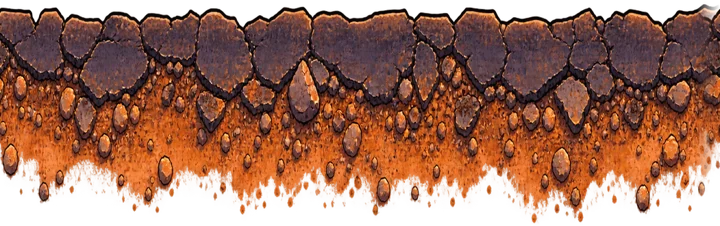
road edgeBlends the road into the dirt.
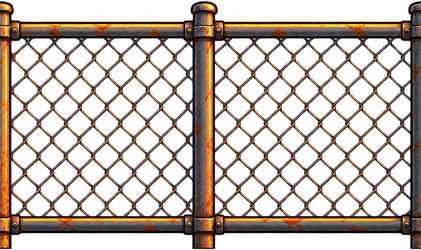
fenceBehind the road.
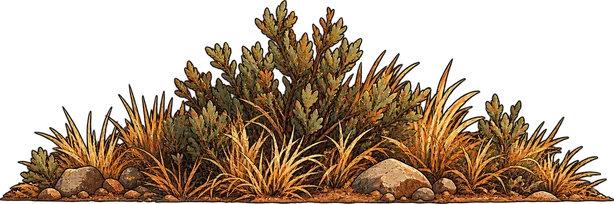
scrubAt the foot of every sign.
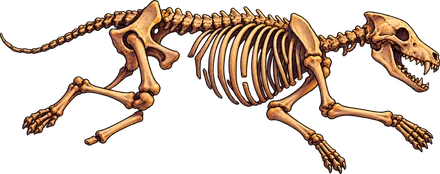
skeletonNow and then, in the dirt.
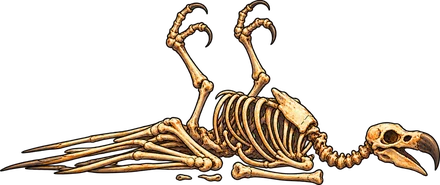
vultureAlso in the dirt.
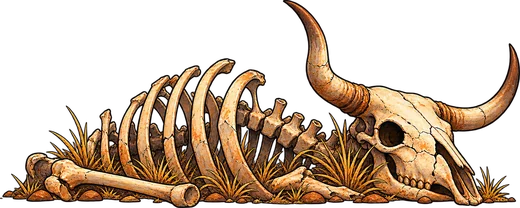
steer skullBy the fence, rarely.
foreground 1Blurred, rushes past the lens.
foreground 2
foreground 3
foreground 4
foreground 5
Hand drawn effect strips for the big moments, physics for everything else. These are the actual frames the game plays.
10 frames. One per drum, staggered, so a cluster of five reads as five.
6 frames of dust and splinters when he goes through a stack.
14 frames. Sized by how hard he hits the road.
Blades on their own layer, always turning. Pass one low and it throws you up and forwards.
Wheels swap to the blur sprite at speed, then the car folds on impact.
Each payout sign glows in its own colour as he passes it.
Real samples for every beat of the round, a light synth layer underneath for the little ticks, and a soundtrack. Press play.
The payout is drawn from a provably fair seed before anything moves. The physics only decides how he gets there, never where.
A planner runs the real simulation off screen, tries launch settings until one lands in the drawn zone, then the game plays that exact run. Same code, same result, every time.
Two background workers keep the next flights solved while you watch this one, so LAUNCH fires the moment you press it.
Turbo plays the same flight at double speed. Auto chains rounds. Neither changes a result.
One build. Landscape gets the full HUD over the scene, portrait gets the control panel underneath.
Matter.js for physics, canvas for drawing, no engine, no framework. Art is plain PNG, sound is plain MP3.